Super Rope: Hero Flying
StagaAction
4.659.00 Reviews
- Version
- 2.4.6
- Installs
- 10.00M
- Age Rating
- Everyone
Screenshots
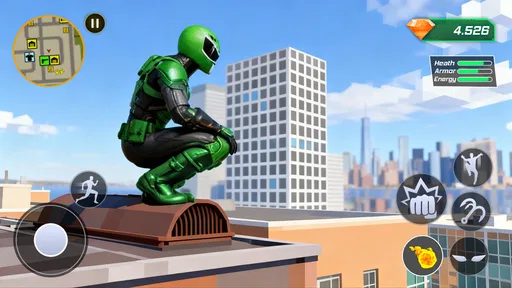
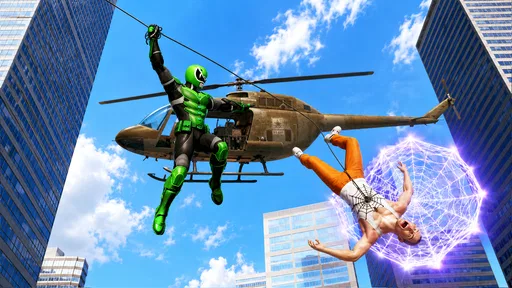
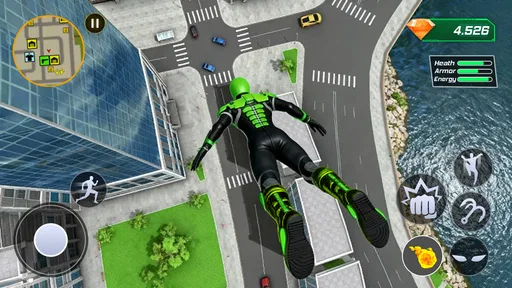
Our Review of Super Rope: Hero Flying
 Analysis by Appyee
Super Rope: Hero Flying is the kind of action game I can pick up without preparation. Its central idea is easy to understand: move through the air like a superhero, use a rope to keep momentum, and turn movement itself into the main challenge. That simplicity makes a strong first impression, especially when I want a quick session rather than a long, story-heavy adventure.
Staga presents it as a free game for everyone, and that broad approach is clear from the moment I start playing. I do not need to learn a complicated control system before the action begins. The appeal is immediate, but the better question is whether the straightforward premise has enough control and rhythm to hold attention after the novelty fades. In my experience, the answer depends heavily on what I want from a mobile action game.
The game has attracted a substantial audience, with over ten million installs and an average rating of 4.5 from around eight thousand ratings. Those figures suggest that its accessible superhero movement has found a comfortable place among casual action players. I would recommend trying it when you want a lightweight flying experience, but I would not approach it expecting the depth of a full console-style superhero game.
How the first minutes establish the mood
The strongest part of the opening experience is its immediacy. A rope-based flying game does not need a long explanation to communicate its purpose. The moment I begin moving, I am thinking about direction, timing, height, and how to keep the character traveling rather than simply falling. That creates a playful sense of control, even when the movement is not perfectly smooth.
There is a useful tension between freedom and correction. Swinging through an open space feels liberating, but every change in direction asks me to react. If I move too aggressively, I can lose a clean line and spend the next moment recovering. If I play too cautiously, the flight loses energy. This makes the basic action more interesting than its short description might suggest.
That said, the first impression is also shaped by the limits of a simple mobile format. Players looking for a detailed campaign, a large cast of characters, or a carefully staged narrative may find the experience light. The game is more successful as a repeatable movement toy than as a traditional superhero adventure. I see it as something to play in short bursts, where the pleasure comes from improving a route or enjoying a satisfying swing.
It works particularly well in everyday situations where my attention is divided. If I have a few minutes while waiting for an appointment or taking a break, I can start quickly and focus on the immediate movement. I do not need to remember a complicated plot or rebuild a strategy from a previous session. That low commitment is one of its practical strengths.
The trade-off is that quick access can also make the experience feel repetitive if I play for too long. I would not choose it for a long evening of uninterrupted gaming unless I already enjoyed its movement loop. Its value comes from the quality of those small moments, not from promising a deep progression system.
The visual language of a flying hero
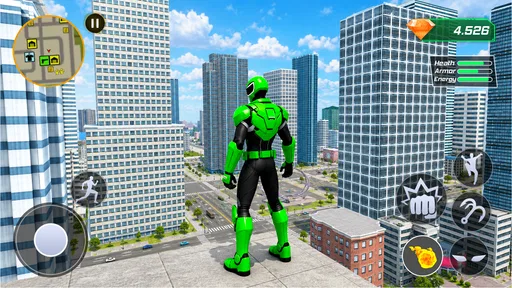
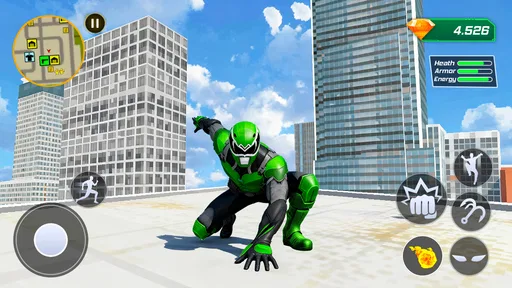
The art direction supports the fantasy by keeping the focus on the character’s movement through space. A superhero attached to a rope is visually readable even when the action becomes fast. I can understand the basic relationship between the hero, the line, and the surrounding environment without needing a crowded interface to explain what is happening.
That clarity matters more here than visual complexity. A detailed scene can look impressive, but if it makes the rope difficult to follow, it works against the main mechanic. The game’s visual identity is most effective when the environment acts as a stage for swinging rather than competing with it. I pay attention to silhouettes, open routes, and the way the character’s position changes from one moment to the next.
The setting also helps create a comic-book-like mood without requiring the game to tell a long story. I get the feeling of stepping into a small superhero playground: the character is defined by motion, the rope is the signature tool, and the surrounding space exists to make that motion possible. It is a focused visual idea rather than an attempt to simulate an entire superhero universe.
One useful habit is to watch the environment before making a large movement. Instead of immediately pulling in the direction I want to travel, I look for the next usable point and consider how much room I have to recover. This turns the scenery into a navigation aid. The best runs come from reading the space a moment early, not from reacting only after the hero has already drifted off course.
This is also where the game may not satisfy players who want rich environmental storytelling. The world is primarily functional and atmospheric. I would choose a narrative action game instead if I wanted meaningful conversations, detailed lore, or locations that change because of my decisions. Here, the setting serves the flying fantasy first.
Sound, timing, and the feeling of momentum
Sound has an important job in a game built around movement. Even when the visual action is simple, audio can make a swing feel deliberate, energetic, or flat. In my sessions, I find that the best rhythm comes from combining what I hear with what I see: I start a movement, watch the hero’s path, and use the next moment to decide whether to continue the arc or correct it.
The game’s mood benefits from this connection between action and pacing. A successful sequence of movement feels almost musical because each decision follows the previous one. I am not only asking where to go; I am asking when to make the next input. That timing gives the simple rope concept more personality than a basic point-to-point movement system would have.
For that reason, I prefer playing with the sound enabled when I am trying to improve. Audio helps the session feel less mechanical and gives the action a clearer pulse. When I am playing casually, I can still enjoy the visual movement without it, but the experience becomes more like a quick reflex exercise and less like a coherent flying sequence.
The pacing is deliberately approachable rather than relentlessly intense. I can enjoy a short run without feeling that every second demands perfect reactions. That makes the game suitable for younger players and for people who prefer uncomplicated action. At the same time, experienced players may want more escalating pressure than the basic movement loop provides.
A practical tip is to avoid treating every swing as a race. I get better results when I use a controlled rhythm: establish a line, allow the hero to travel, then make a measured correction. Rapidly changing direction can feel exciting, but it often sacrifices control. The game rewards patience more than frantic tapping, especially when I am trying to preserve a smooth route.
Where the mechanics fit and where they resist
The core mechanic fits the mobile format because it is understandable with limited attention. The rope gives the action a physical idea that I can grasp quickly, while the flying movement provides enough variation to stop the game from feeling like a static platformer. I can play with a simple goal in mind: stay in motion, read the space, and make the next useful adjustment.
The main challenge is precision. Rope movement can feel unpredictable when I expect an immediate response but receive a broader arc instead. That is not necessarily a flaw; swinging should have momentum. However, it means I need to learn the game’s timing rather than assume that every input will produce a sharp turn. New players may initially blame the controls when the real issue is overcorrecting.
I recommend spending the first few attempts learning how far a movement carries before trying to move quickly. This is one of the most useful ways to reduce frustration. Once I understand the difference between starting a swing and steering during a swing, the action becomes more readable. The game feels better when I cooperate with its momentum instead of fighting it.
Another non-obvious strength is that the same mechanic supports two different play styles. I can play casually, aiming simply to enjoy the superhero fantasy, or I can treat each run as a small exercise in route planning. The first approach is relaxing; the second gives the game more replay value. Players who like improving their own consistency may get more from it than players who need constant new content.
Still, the mechanics are not a substitute for a larger action system. I would look elsewhere if I wanted character builds, complex combat combinations, equipment choices, or a campaign with several distinct gameplay modes. Super Rope: Hero Flying is focused on traversal and the sensation of being airborne. Its narrow focus is also its identity.
The game is free, which lowers the barrier to trying it. That matters because the rope movement is something I would rather experience directly than judge from a description. It is also rated for everyone, making it an easy recommendation for families looking for uncomplicated action. Parents should still decide whether the quick movement and repeated attempts suit a particular child’s preferences, but the game’s basic concept is broadly approachable.
Who will enjoy it most
I think the best audience is someone who likes short action sessions, superhero themes, and movement-based challenges. It is a good fit for a player who enjoys testing timing without studying a complicated rulebook. It can also work for someone who wants a game that feels active immediately, rather than one that spends its first session introducing a large world.
It is less suitable for players who need a strong narrative reason to continue. The flying fantasy may be enough for a while, but it does not replace story progression for everyone. I would also hesitate to recommend it to someone who dislikes momentum-based controls, because the learning curve comes from understanding movement rather than simply pressing a direction and stopping exactly where intended.
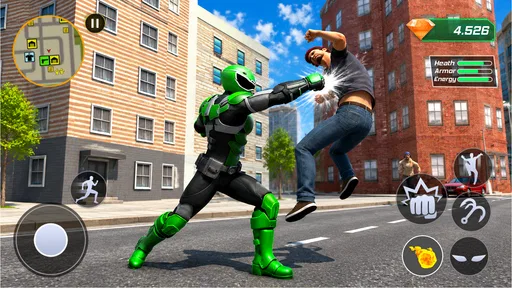
Compared with a conventional platform game, this title puts more emphasis on arcs, air control, and recovery. Compared with a combat-focused superhero game, it offers a much lighter experience with less emphasis on fighting and character development. That makes it a useful alternative when I want the feeling of superhero travel without committing to a large adventure, but it will feel limited if combat is the main reason I play superhero games.
The current version is 2.4.4, and the game supports devices running Android 7.0 or later. That makes checking device compatibility worthwhile before installing, particularly on an older phone or tablet. On a suitable device, the appeal is its low-friction structure: start the game, learn the movement, and decide quickly whether the rope-based action matches my taste.
My verdict on the atmosphere
What makes Super Rope: Hero Flying work is the agreement between its presentation and its mechanics. The superhero setting is not merely decoration; it gives the rope movement a clear fantasy purpose. The visual language keeps attention on the airborne character, the sound and timing encourage a steady rhythm, and the action asks me to think in terms of momentum rather than ordinary walking or jumping.
That coherence is more valuable than a long feature list. I can see what the game wants me to feel: light, mobile, and slightly daring. When a swing connects and I preserve my direction, the result is satisfying because the presentation and the control system are telling the same story. I am not just moving an avatar; I am trying to maintain the flow of a flying hero.
My main reservation is longevity. The focused design may become familiar quickly, especially for players who prefer constant unlocks, changing objectives, or a detailed campaign. The experience is strongest when I treat it as a compact action toy with room for personal improvement. It is not the right choice for anyone expecting a complete superhero simulator.
For a friend asking whether to install it, I would say yes if you want a free, accessible way to experiment with rope-swinging movement and short superhero sessions. I would suggest trying it with sound on, learning the momentum before rushing, and using the environment to plan the next swing rather than reacting at the last instant. Those small adjustments reveal more of the game’s character.
Staga has created a straightforward action game with a clear mood and an instantly recognizable hook. Its broad audience, strong average rating, and large install base reflect how easily the concept can invite people in, while its limitations are equally clear: the experience is narrow, repetition can set in, and precision takes practice. If you want a quick flying challenge built around rhythm and momentum, this is an enjoyable choice; if you want a deep superhero adventure, choose a more expansive alternative.
Verdict
Strengths of Super Rope: Hero Flying
- Simple controls make swinging and flying easy to learn.
- Fast-paced missions provide short, entertaining gameplay sessions.
- Hero movement feels satisfying when chaining ropes between buildings.
- Bright visuals make the action easy to follow on small screens.
- Playable offline, making it suitable for travel or quick breaks.
Limitations of Super Rope: Hero Flying
- Gameplay can become repetitive after completing several similar missions.
- Frequent advertising may interrupt the experience between levels.
- Some upgrades may require considerable grinding to unlock.
- Movement physics can occasionally feel imprecise near buildings.
- The game may lack enough depth for players seeking a long campaign.
Similar Picks in This Category
View All
Temple Run 2: Endless Escape
Imangi Studios4.1

PUBG MOBILE
Level Infinite4.3

Free Fire: 9th Anniversary
GARENA INTERNATIONAL I4.4

Talking Tom: Hero Dash Run
Outfit7 Limited4.3

slither.io
Lowtech Studios3.9

Sniper 3D:Gun Shooting Games
Wildlife Studios4.6
Frequently Asked Questions
What is Super Rope: Hero Flying?
Super Rope: Hero Flying is an action game focused on swinging, flying, and moving quickly through an urban environment. You control a superhero-style character who uses a rope to travel between buildings, avoid obstacles, and complete challenges. The game is designed for short, casual sessions and combines simple controls with arcade-style movement and missions.
How do you play Super Rope: Hero Flying?
Gameplay is mainly based on tapping, swiping, or using on-screen controls to attach the rope, swing through the city, and release it at the right moment. Timing is important because releasing too early can make the character fall or miss a target. As you progress, you may need to navigate more complicated routes, collect items, and complete objectives while maintaining momentum.
Is Super Rope: Hero Flying free to download and play?
The game can generally be downloaded and played without an upfront purchase, although availability and pricing may vary between the Google Play Store and Apple App Store. Free versions of games like this commonly include advertisements and may offer optional in-app purchases for extra content, upgrades, or other conveniences. Check the store listing before downloading for current details.
Does Super Rope: Hero Flying require an internet connection?
Many of the basic arcade features may work without a constant internet connection, which makes the game suitable for quick offline play. However, advertisements, updates, leaderboard functions, cloud features, or in-app purchase verification may require internet access. Because requirements can change with updates, it is best to test the game offline after installation rather than assuming every feature will be available.
Is Super Rope: Hero Flying suitable for children?
Super Rope: Hero Flying is generally easy to understand and may appeal to children because of its colorful superhero-style presentation and straightforward controls. Nevertheless, parents should review the age rating, advertising content, privacy information, and any available in-app purchases before allowing younger players to use it. If the game includes frequent ads or purchase prompts, parental controls are recommended.
Play our best games!


